

How to Make Android More Accessible For People With Low Vision
Technology has made life easier for almost everyone and that includes people with visual impairments. While there are a lot of technological advancements to make things easier for people with low vision, there's e'er a dubiousness if they will be able to employ a smartphone. Well, they certainly can!
Android is the well-nigh widely used mobile Bone across the globe, then it's understandable that Google has made certain to constantly evolve the platform'southward accessibility features. And then, if you take low vision or know someone who is visually impaired, here's how you can make Android more attainable:
1. Control Android with your voice
Yeah, this is true! Google recently announced a cool new app dubbed "Voice Access" that lets y'all control your Android device with your phonation. The beta app allows you to navigate through Android and its different UI elements, all with your voice. The app also numbers apps, so you tin easily launch them by but speaking the number. All the other features like TalkBack, Google Now and dictation are integrated correct in the app, so you don't take to touch your phone at all.
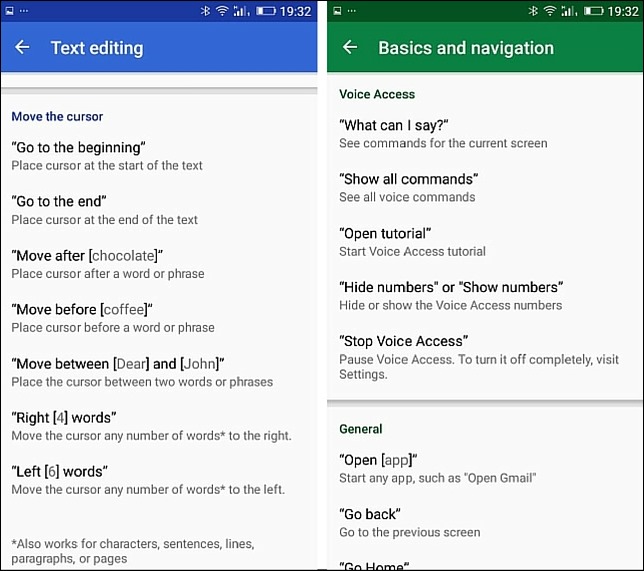
While the app has a bit of learning curve, you lot should get used to it after some fourth dimension. Well, yous should definitely give information technology a shot. To become the app, enroll in the beta here so, download the app from the Google Play Store. The beta entries are most probably over, then bank check out our detailed post on how to install and use Google Voice Admission.
ii. Utilize Screen Reader (TalkBack)
TalkBack is a screen reader feature, which every bit yous might have guessed, reads yous the contents on the screen. Information technology tells you your actions, your notifications and everything else that yous practice on your Android device. You can either plough on TalkBack when y'all are setting up your Android device or later in the Settings. To plough it on when Android is in the initial setup screen, printing and hold two fingers on the setup screen. If y'all want to prepare it upward later, go to Settings->Accessibility and enable "TalkBack".
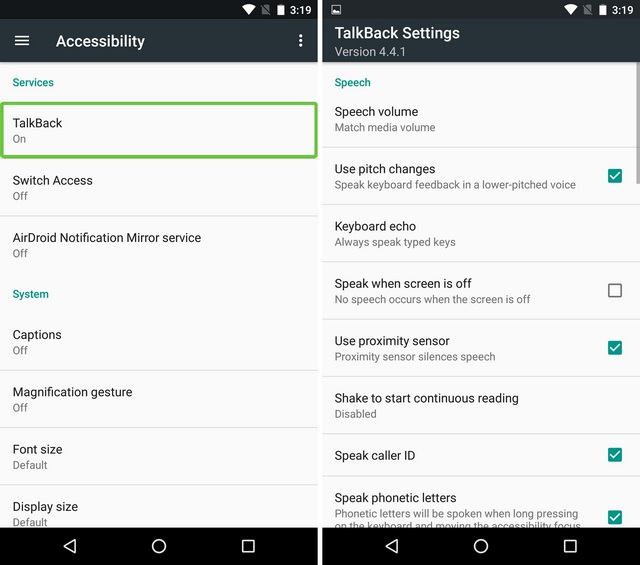
Once TalkBack is enabled, you will have to use double taps to select, as your unmarried taps will make TalkBack read what you accept just pressed. Also, you will take to use two fingers to scroll through a page.
Note : We'd recommend using a headset or an earphone when entering passwords or any sensitive info through TalkBack.
3. Increase the DPI and font size
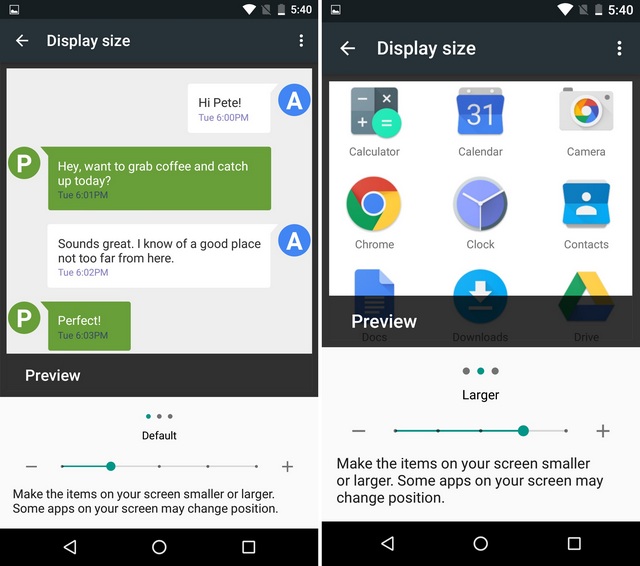
While Android has always included the ability to increase the font size, Android N brings the ability to change the DPI or display size. Altering your device's display size should better your experience if y'all accept low vision because unlike font size, increasing display size increases the size of all elements on the screen.
To change the brandish size or font size, go to Settings->Accessibility->Display size or Font size and apply the slider to set up it to large, larger or largest.
four. Employ Magnification Gestures
If you are facing problems viewing the UI elements even later on enlarging the display size, you should enable magnification gestures. As the name suggests, this features lets you magnify specific elements of the interface temporarily. You can turn on Magnification gesture in Settings->Accessibility.
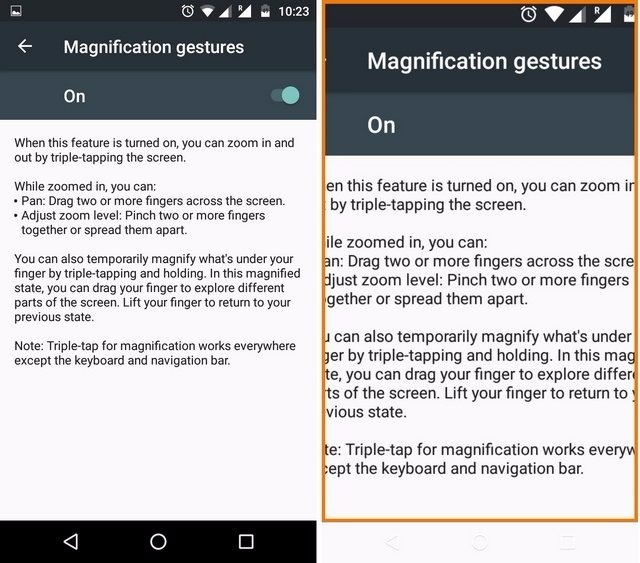
Once turned on, yous volition be able to zoom in and zoom out by a quick triple tap. When zoomed in, yous will be able to scroll by dragging two fingers and you can adjust the zoom using pinch, like the manner we zoom in pictures. You tin fifty-fifty zoom temporarily by a quick triple tap and holding downwards the finger at the tertiary tap. Y'all tin and then move effectually your finger to navigate and the interface volition zoom out when you lot elevator the finger.
Annotation : Yous cannot employ the magnification gestures on the keyboard and the navigation bar at the lesser.
five. Prepare Switch Access
Switch Access lets you control an Android device using an external switch device, external keyboard or your device'south hardware buttons. You can plow on Switch Admission in Settings->Accessibility but you lot'll accept to set up the keys earlier yous starting time using it.
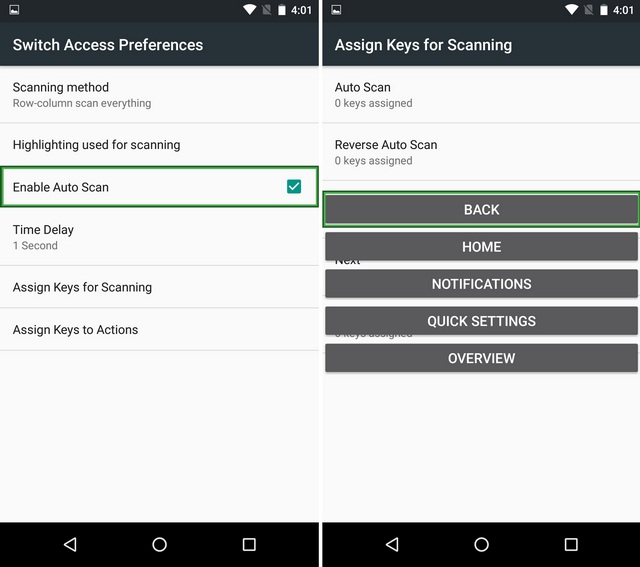
Firstly, y'all will have to select the "Scanning method". Scanning is goose egg only a browse of all the options bachelor on the screen out of which you can choose through switches. Yous can set it to auto scan, which will proceed moving from one option to the other, with a delay of 1 2nd for you lot to select an pick. And so, you lot can assign keys for scanning (select, next, previous etc.) and the keys to accept activeness (long printing, domicile, back etc.). Yes, it's a complicated procedure just you lot should get the hang of it after a while.
6. Turn on Color correction or inversion
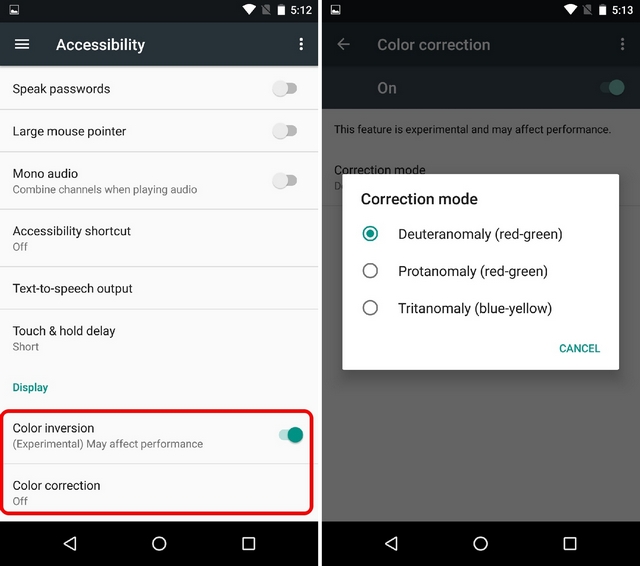
Google has included a color correction as well as color inversion feature in the Android's Accessibility options. Color correction alters the colors on the display to compensate for whatever color blindness, while color inversion exchanges color values. These are experimental features, then they may or may not work also on all devices only yous tin can give them a shot to run into if it makes whatsoever difference for you. To enable these options, go to Settings->Accessibility and go to the bottom of the page.
seven. Type through dictation
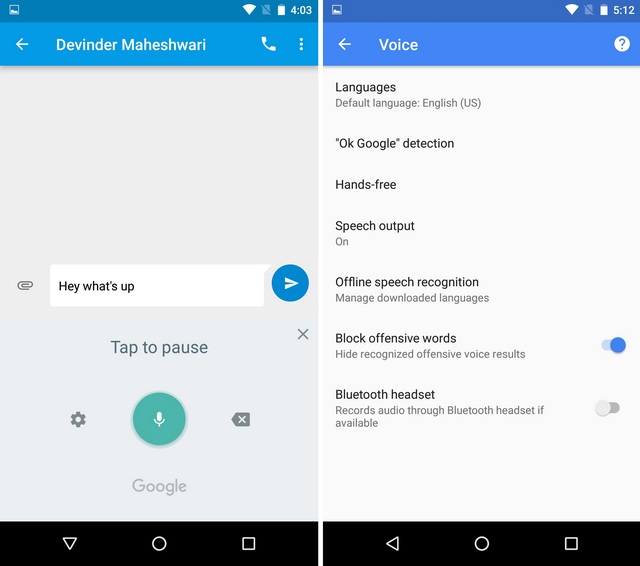
Google offers dictation back up with its keyboard in Android, so that you can easily blazon text easily-free. You lot tin type messages, have notes, all without even touching the keyboard. Moreover, you can dictate texts even when you are offline. To start noting down a note or a message, you can use Google Now or y'all tin use the microphone push button above the keyboard to starting time dictating. This should come in handy for people with low vision, as Google's text-to-voice communication capabilities have improved a lot over the years and yous can wait accurate typing most of the time.
viii. Try Google Now
Google Now is a highly functional virtual assistant and you can do various tasks with it, past only using your voice. For case, you can ready alarms, reminders, send texts and more. You tin fifty-fifty open up apps and browse various websites without having to touch your device. All you need to practise is hitting the mic button in the Google Search bar or say "Ok Google" and start proverb what y'all want it to do.
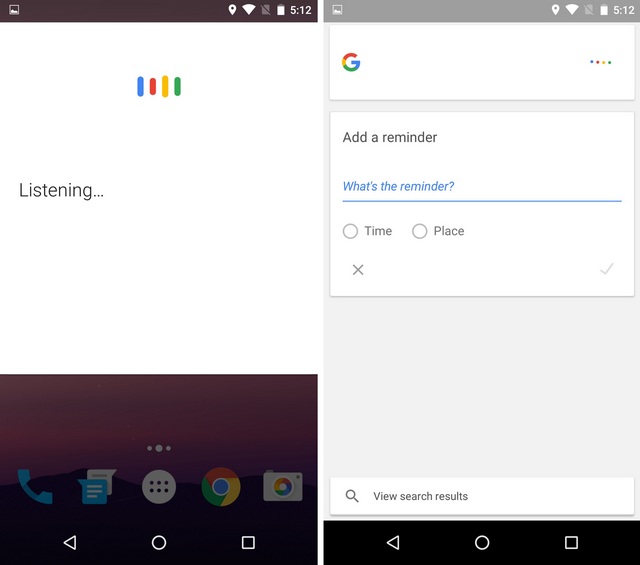
Moreover, mod Android devices let you unlock your device by the "Ok Google" hotword, even when the phone is locked. Google Now is already a pretty useful feature for people with sight issues and with the arrival of Vocalisation Access, things should get a lot easier.
nine. Other options
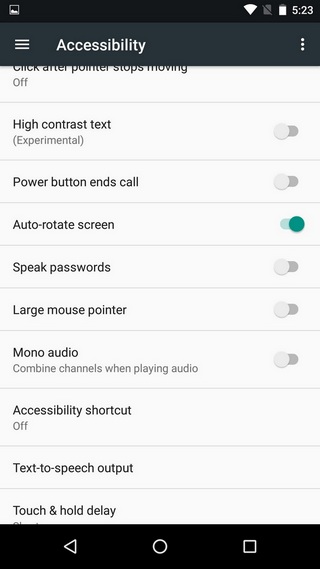
Android also includes other accessibility features like the ability to set an Accessibility shortcut to access it quickly, end calls with power button, capture pictures using the book buttons, high contrast text and more.
Meet MORE: How to Make Windows 10 More Accessible For People With Low Vision
These Accessibility options make Android easy for people with low vision
The addition of Vocalisation Access to Android's accessibility options certainly makes a huge difference, when you think from the point of view of a visually impaired person. Now, he/she can hands employ Android and its diverse apps with only their voice. Besides, the other options go a long way in making things easy. So, if you lot accept a vision problem or someone you know has issues viewing Android's interface, this options should come in especially handy. Well, requite them a shot and tell united states what you think.

Source: https://beebom.com/how-make-android-accessible-people-low-vision/
Posted by: jacksonsecianced1998.blogspot.com
0 Response to "How to Make Android More Accessible For People With Low Vision"
Post a Comment